Leadership case 02
Intel D1D · Engineering Module Manager · 2019—2024
Building the system around vertical diffusion furnaces.
Turning deep troubleshooting knowledge into 24/7 organizational capability.
I led engineering across 300 mm batch vertical diffusion furnaces supporting thermal oxidation, deposition, and trench fill in a high-volume wafer fab. That responsibility included ASM A412 toolsets, but the work was broader: process health, equipment recovery, coverage, standards, and technical capability for 24/7 execution.
The operating challenge
The module had to protect process stability and output while absorbing preventive maintenance, qualification, experiments, equipment recovery, and shifting WIP. Expertise could not live with a few individuals or on one shift.
What I built and changed
From complexity to repeatable execution.
Build coverage and ownership
Established the diffusion engineering coverage system from the ground up: roles, 24/7 support, escalation paths, qualification, cross-training, and train-the-trainer ownership. The goal was technical capability that could move across shifts, not remain concentrated in a few people.
Trace the line through
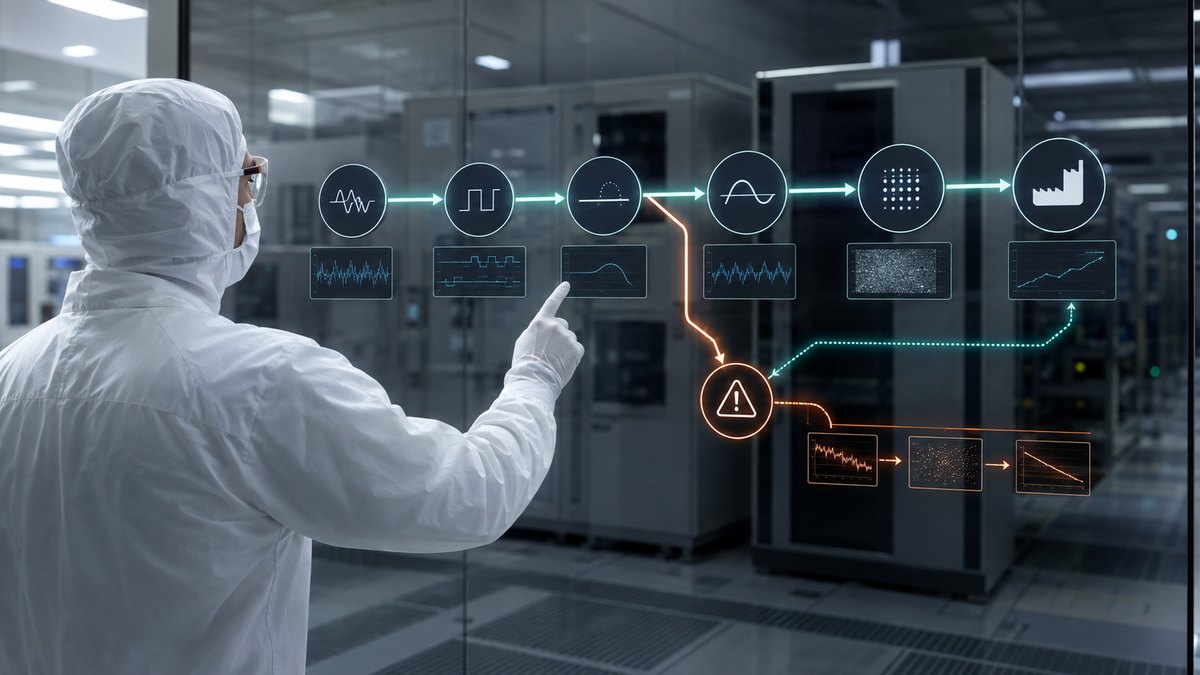
Started with the required process result, then followed the path backward through material condition, chamber response, sensors, controls, software, hardware, and utilities—using schematics, manuals, history, and process knowledge.
Isolate the first divergence
Compared expected and observed condition at each boundary, separated variables, tested the strongest evidence first, and resisted repairing the loudest symptom when it was downstream of the real fault.
Reconnect and standardize
Verified the local correction through process and factory output, then converted the lesson into start gates, exit criteria, shift coverage, escalation paths, certification, train-the-trainer ownership, and controlled return to service.
The result
The engineering function gained defined roles, a 24/7 coverage structure, qualification paths, and ownership for transferring knowledge. Preventive-maintenance planning and equipment recovery training connected individual troubleshooting skill to controlled team execution. This is the organizational contribution: a repeatable way to develop people, recover equipment, and carry capability across shifts.
“Standardize the recovery, then improve the system.”
Looking for an operations leader?
Start a conversation